-
The short version: Prismacolor's 24-piece marker set and the Verithin 36 colored pencil set serve two completely different workflows — and picking the wrong one for your team will waste both time and budget.
-
Why I'm qualified to talk about this (and where I'm not)
-
The 24-piece marker set: when bold and fast wins
-
The Verithin 36 colored pencil set: precision over speed
-
The mistake that cost us $2,400
-
When Prismacolor isn't the right call
-
Practical procurement tips
-
Bottom line for B2B buyers
The short version: Prismacolor's 24-piece marker set and the Verithin 36 colored pencil set serve two completely different workflows — and picking the wrong one for your team will waste both time and budget.
If you're making a purchasing decision for a school, design department, or corporate creative team, here's what I've learned after managing art supply orders for the last five years. The 24-piece marker set is your go-to for quick color blocking, layouts, and presentations where bold, saturated coverage matters. The Verithin 36 set, on the other hand, is built for precision linework, technical drawing, and detailed coloring where control is everything. They're not interchangeable — and trying to use one for the other's job will disappoint everyone involved.
I'm an office administrator for a mid-size company (about 300 employees across two locations), and I manage all our creative supply ordering — roughly $45,000 annually across 8 vendors. I took over this role in 2020, and I've made enough mistakes to know what works and what doesn't. I'm not an artist or a designer, so I can't speak to color theory or blending techniques from a practitioner's perspective. What I can tell you is what holds up under real office use, what keeps our internal clients happy, and what avoids procurement headaches.
Why I'm qualified to talk about this (and where I'm not)
I process about 60-80 orders annually for creative supplies, and Prismacolor comes up in roughly a third of those. Our design team uses markers heavily; our education and training group swears by colored pencils. Over the years, I've tested orders from multiple distributors, compared pricing across vendors, and dealt with the fallout when I got the product wrong. (Note to self: never assume "premium colored pencils" means the same thing to everyone.)
If I remember correctly, our first Prismacolor order was for 12 sets of 24-piece markers in early 2021. The design team loved them — said the pigment was noticeably more vibrant than what we'd been using. That success led to a larger order for Verithin 36 sets later that year, which the training team used for workshop materials. Both groups were happy, but for different reasons.
What I can't speak to is how these products perform for fine artists or illustrators working on archival projects. My expertise is in procurement and end-user satisfaction within a corporate environment. If you're an independent artist looking for gallery-quality materials, my advice might not apply. This is one of those cases where knowing the limits of your experience matters.
The 24-piece marker set: when bold and fast wins
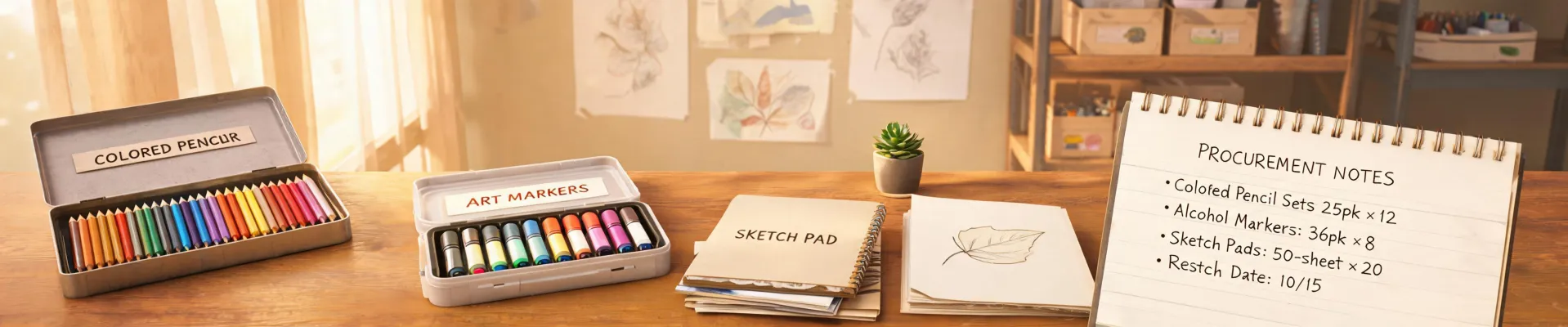
The Prismacolor 24-piece marker set is, in my experience, the best option for teams that need to produce visual content quickly — think presentation boards, concept sketches, or color studies. The dual tips (broad chisel and fine point) give users flexibility without needing to switch tools. Our design team consistently reports that these markers blend well and lay down color evenly, which reduces rework.
From a procurement standpoint, the 24-piece set hits a sweet spot: enough colors for meaningful variation without overwhelming storage or budget. I've seen quotes ranging from $35 to $55 per set depending on the vendor and volume (based on distributor pricing from Q4 2024; verify current rates). For a team of 10 designers, that's roughly $350-550 per cohort — reasonable for a tool that lasts several months with regular use.
One thing I learned the hard way: these markers are alcohol-based, which means they bleed through thinner paper. We had to switch from standard copy paper to marker paper or cardstock (around 90 gsm minimum, ideally 120 gsm). That added about $0.02 per sheet to our paper costs. It's not a dealbreaker, but it's a hidden cost that caught me off guard the first time. (Should mention: we now budget for paper upgrades whenever we order markers. Lesson learned.)
The Verithin 36 colored pencil set: precision over speed
The Verithin 36 colored pencil set is a different animal entirely. These pencils have a harder, thinner lead than typical colored pencils — which is exactly why our training and documentation teams prefer them. They hold a sharp point longer, making them ideal for detailed linework, technical illustrations, and anything requiring fine control.
If I'm being honest, I initially underestimated the Verithin line. I thought "colored pencils are colored pencils" — and I was wrong. Our training coordinator told me the Verithin pencils allowed her team to create consistent, repeatable line weights in instructional diagrams, something standard colored pencils couldn't deliver. The 36-color range gave them enough variety for color-coding without needing to manage 72 or 120 sets.
Pricing for the Verithin 36 set typically runs $25-40 per set (based on distributor quotes from early 2025). That's actually more cost-effective than the marker set on a per-unit basis, though the use cases are different. I've found that Verithin pencils last longer in our environment — a single set can go 6-8 months with moderate use — which improves total cost of ownership. Markers, by contrast, tend to dry out or get lost faster, especially in shared workspaces.
The mistake that cost us $2,400
I still kick myself for this one. In 2022, I tried to save money by ordering a cheaper brand of colored pencils — saved about $200 upfront. The team complained within two weeks: the leads broke constantly, the colors were dull, and the pencils couldn't hold a point. I had to place an emergency rush order for Prismacolor Verithin sets, including expedited shipping. Total additional cost: roughly $2,400 between the unusable pencils, rush fees, and lost productivity. That "budget" decision ended up costing more than if I'd ordered the right product from the start.
The lesson wasn't that Prismacolor is the only option — it's that understanding the use case matters more than the unit price. Our team needed precision and durability. The cheaper option didn't deliver. Now I verify performance requirements before making any substitution, and I always order a sample set first if we're trying something new.
When Prismacolor isn't the right call
This is where the "professional boundaries" view comes in. I'm a fan of Prismacolor for our use cases, but I'd be overstepping if I claimed it's always the best choice. Here's where I'd recommend looking elsewhere:
- Outdoor or UV-exposed work: Prismacolor markers and pencils aren't designed for extreme lightfastness. If your team is creating materials for long-term outdoor display, you might need specialized archival or UV-resistant products.
- Budget-constrained bulk orders: If you're equipping a large classroom on a tight budget, Prismacolor's premium pricing may not be feasible. In those cases, I've found that mid-range brands (not naming names, but you can find reliable options) offer acceptable quality at 40-60% lower cost — just set expectations accordingly.
- Young children or casual use: The Verithin pencils have a harder lead that can feel scratchy to young users, and the markers can bleed through standard paper. For elementary school settings, I'd recommend washable or student-grade products.
These aren't weaknesses in Prismacolor — they're examples of matching tools to tasks. A vendor who tells you their product works for everything is a vendor I don't fully trust. Prismacolor has never claimed to be a one-size-fits-all solution, and that honesty is part of why I keep ordering from them.
Practical procurement tips
Based on what I've learned, here's how I approach Prismacolor orders now:
- Match the product to the workflow: Markers for quick visuals and color blocking; Verithin pencils for detail work and technical drawing. If your team does both, consider ordering a mix rather than standardizing on one.
- Budget for consumables: Marker paper or heavier cardstock adds cost. Factor that into your total cost calculation, not just the unit price.
- Verify distributor reliability: We had one vendor who offered a great price on Prismacolor but couldn't provide proper invoicing — cost us $1,200 in rejected expense reports. Now I verify invoicing capability before placing any order over $500.
- Order samples first: For any new product or new user group, I order one or two sets before scaling up. It's saved us from expensive missteps at least three times in the past two years.
One more thing I should add: Prismacolor's color range (up to 200 colors in some lines) is impressive, but for most B2B applications, 24 or 36 colors is plenty. Going bigger increases cost and complexity without proportional benefit. Our design team uses maybe 15-18 colors regularly out of the 24-set. The extra colors are nice to have, but they're not driving productivity.
Bottom line for B2B buyers
Prismacolor's 24-piece marker set and Verithin 36 colored pencil set are both excellent products — for the right scenarios. The markers deliver vibrant, blendable color for fast creative work. The Verithin pencils offer precision and control for detailed tasks. Neither is a universal solution, and trying to force one into the other's role will lead to frustration and wasted spend.
For us, the right approach has been to stock both, assign them based on the team's specific needs, and accept that good tools cost more upfront but save money over time. That approach has kept our internal clients satisfied and our procurement process running smoothly. And in my role, that's the metric that matters most.
Discuss a color supply plan
If this article relates to a classroom, reseller, or workshop program you are planning, send the context to Prismacolor and request product guidance.